
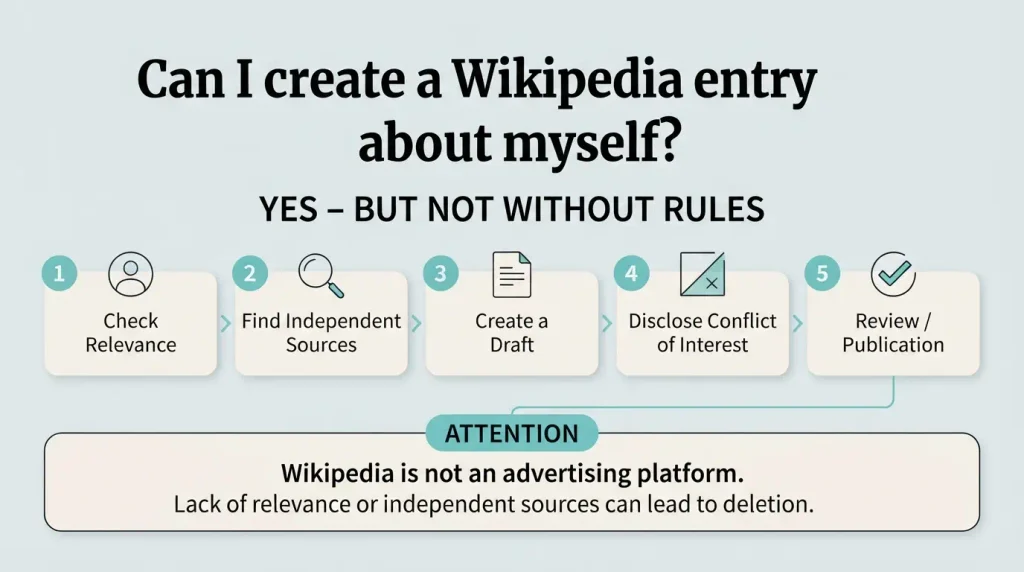
Wondering if you can have a Wikipedia page about yourself, your company, or your work? Many people contact me with this exact question.
In this guide, you’ll discover who can have a Wikipedia page, how to check your eligibility, and the exact steps to create one without risking deletion.
Last updated: 6 April 2026.
Step 1: Check if a Wikipedia Page Already Exists About You
If a Wikipedia article about the same subject has already been created and later deleted, it’s useful to know — not to request its restoration, but to understand what happened before.
Reviewing past deletions helps you see how the topic was presented, why it might have been removed, and how to build a stronger case if you decide to submit it again later.
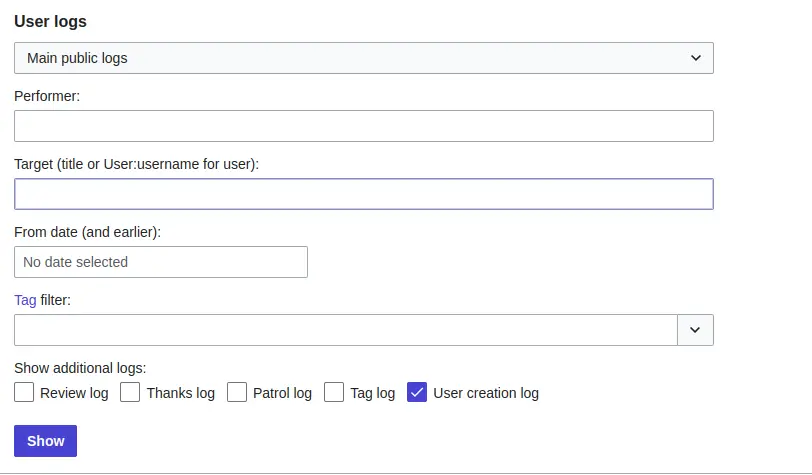
Here’s how to check whether a page about you already existed:
- Go to Wikipedia’s main public logs.
- In the “Target” field, enter your name (or the subject of the page you want to create).
- Click on “Show”.
If you see “No matching items in log,” that means no page has ever been created.
✅ You can safely start from scratch.
If you find one or more deleted pages listed, take the time to review the deletion summaries.
💡 This context can help you understand previous objections and prepare a better, more neutral, and well-sourced version if you choose to draft a new article later.
Step 2: Are You Eligible on Wikipedia?
Anyone can edit or create articles on Wikipedia, but not everyone can have their own Wikipedia article.
To have a dedicated page, you need to meet Wikipedia’s notability criteria.
What are Wikipedia’s notability criteria?
There are:
- general notoriety criteria, applicable to everyone ;
- specific criteria, depending on your field (artist, athlete, company, politician, entrepreneur, etc.).
Note : there are no specific criteria for lawyers.
The general criteria are the ones you rarely deviate from. Here they are:
A topic is presumed to be suitable for a stand-alone article or list when it has received significant coverage in reliable sources that are independent of the subject.
General notoriety criteria on Wikipedia (here)
How many media mentions are needed for a Wikipedia page?
You must have:
- at least two media appearances;
- at least two years apart;
- that only talk about you;
- in well-known national media (no regional daily press or trade press);
- that aren’t copy-pasted press releases or sponsored articles.
So, you’ll need to find these media publications, which you can then use to write the content of the article.
👀Check your eligibility on Wikipedia with a notability audit
Request a comprehensive audit from us to determine your eligibility on the encyclopedia (delivered within 48 hours) or learn about alternative options that may be more relevant for your situation.
If you’re not well-known enough to have a Wikipedia article, you might be interested in this article: 8 alternative sites to Wikipedia.
Step 3: Create a Wikipedia Account
Do you meet the criteria for a Wikipedia page?
✅ If so, you may want to consider creating a page!
Start by creating a Wikipedia account if you don’t already have one.
To do this, go to Wikipedia in the language version where you want to create the page (for example, in English) and click on “Create account.”
You will then need to provide a valid email address and choose a username.
Step 4: Create a Draft of Your New Page
There are several ways to create a new article on Wikipedia. Here’s the method I recommend if you have little experience with Wikipedia.
Once logged into your Wikipedia account, go to the left menu in:
- Getting Started on Wikipedia
- How to Create an Article
- Start
You’ll be asked to answer several questions to ensure you understand the article creation process. Then, you’ll reach a page where you can start creating your article.
Want to speed things up? In that case, you can create your article from scratch by accessing your draft.
- Log into your account.
- Access your draft by typing in your browser’s URL:
https://en.wikipedia.org/wiki/User:[your Wikipedia username]/Draft
This is where you can start writing your page, but it won’t be officially published until you click on “Publish my draft.”
🚨 This faster method is not recommended if you’re not used to contributing to Wikipedia; your page creation process may not succeed, or your page could quickly be deleted once it’s online.
Step 5: Write Your Page Using a Quality Template
You must comply with strict criteria regarding content and form for your Wikipedia page to:
- be published;
- not be deleted;
- not display unsightly red “self-promotion” or “promotional tone” banners.
I recommend using a good-quality Wikipedia article as a template for your page.
You can find a list of good-quality articles here.
For example, I like to draw inspiration from the pages of :
- Preity Zinta for creating an entrepreneur page;
- Vincent van Gogh for an artist;
- Hydro-Québec for an institution or company.
I’ve created my own template to guide you in creating your first Wikipedia article.
🚨 Every piece of information on the page must be supported by a source external to the subject of the article. This means you can’t rely on your personal website to support the page’s content.
✍️ Delegate the creation of your Wikipedia page
Leverage our 12+ years of experience with the encyclopedia to save time and maximize your chances of success.
Step 6: Submit Your Article for Proofreading
Have you finished your article and met all Wikipedia’s content and form requirements?
You can publish it in two different ways :
- Request proofreading first (recommended if you’re new to Wikipedia).
- Or Publish your draft. The article will go online right away, but bots and humans will still review it to ensure it belongs on the encyclopedia.
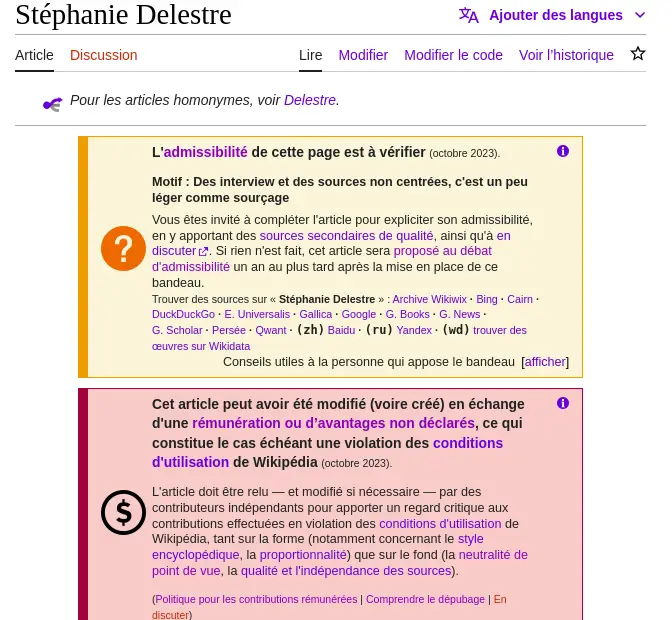
🚨 Wikipedia does not prohibit you from creating a page about yourself, but it does require you to declare your connection of interest (personal benefit or remuneration). Indicate this on the discussion page of the newly created page and on your profile, following Wikipedia’s recommendations.
What’s the risk if you don’t? You run the risk of having an unsightly “this article may have been modified in exchange for undisclosed compensation or benefits” banner displayed at the top of your page.
I hope this article has been helpful! If you have any questions, I’m always available to answer them in the comments.
If you’d like me to assist you on Wikipedia, feel free to contact me for a quote.
Happy contributing 🙂!
✍️ Delegate the creation of your Wikipedia page
Leverage our 12+ years of experience with the encyclopedia to save time and maximize your chances of success.
FAQ: Having a Wikipedia Page
Can I create a Wikipedia page for myself?
Yes. You can create a page about yourself, but you must declare any conflict of interest and strictly follow Wikipedia’s neutrality and sourcing rules. Failing to do so may lead to warnings or deletion.
How well-known do you need to be?
Wikipedia requires significant coverage in reliable, independent sources over time. Typically, at least two media articles, spaced two years apart, are needed to meet notability standards. Personal fame alone is not sufficient.
Can a Wikipedia page be deleted after publication?
Yes. A page can be removed if it fails notability criteria, lacks reliable sources, or violates Wikipedia’s editorial rules. Regular monitoring and sourcing are essential to maintain the article.
Can you pay someone to create your Wikipedia page?
Yes. You can hire a professional, but the payment must be disclosed. The content must comply fully with Wikipedia’s rules on neutrality, sourcing, and conflict of interest to avoid deletion.
What if I’m unsure about eligibility?
👀 Check your eligibility on Wikipedia with a Notability Audit. Request a comprehensive audit from us to determine your eligibility on the encyclopedia or learn about alternative options that may be more relevant for your situation. Proper preparation increases the chance of successful publication.

Written by Albin Guillaud
A Wikipedia contributor since 2014, with Wikiconsult I support businesses, institutions, public figures, and agencies looking to create, update, or monitor their presence on Wikipedia.